
Developing Disability advocacy skills evokes change. Discover where advocacy is needed, what skills are helpful in creating lasting change in disability inclusion.
If you’ve read my article, What is Disability Advocacy?, you understand what we will be discussing. You will realize how certain skills fit in. Keep in mind, you don’t have to possess them now. Advocacy skills are generally learned and perfected over time.

Advocacy is real. Real people are affected by real barriers with real consequences every single day. Once we understand what advocacy is and the different ways it can show up, the next question becomes very practical: Where is it most needed?
If you start looking closely, the answer becomes obvious. Anywhere access is inconsistent. Anywhere, fairness depends on who is in the room. Anywhere inclusion sounds good but has not yet been fully implemented is where advocacy belongs.
Where Advocacy Is Needed
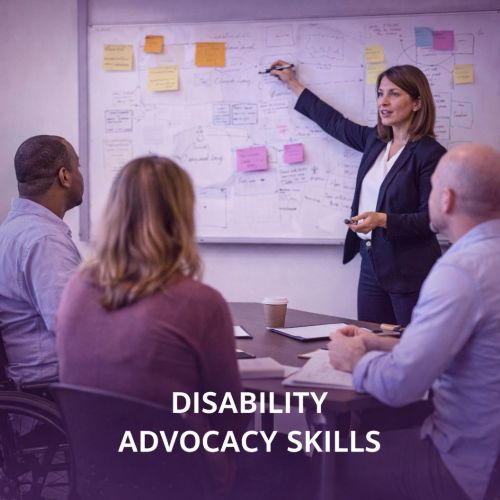
While much of my work centers on disability rights, the heart of advocacy applies anywhere people are unintentionally (and sometimes intentionally) left out. Over the years, I have seen the same pattern repeat itself over and over again, across different environments. The issue may look different on the surface, but the underlying problem is often the same: systems were designed without fully considering everyone who uses them.
You are probably wondering what systems I am referring to. There are more than people realize: digital and technology, transportation, health care, education, and workplace and employment, to name a few. Think about these and other systems as you continue reading.
Here are some of the areas where I consistently see advocacy making a difference.
Disability Rights
Disability rights remain at the core of my advocacy efforts: my primary focus. We do have laws. We do have protections. But laws on paper do not automatically translate into lived accessibility.
I have seen barriers appear in schools, workplaces, transportation systems, healthcare settings, housing, and public events. Sometimes it is subtle. Sometimes it is obvious. Either way, rights must be practiced, not just promised.
In the disability arena, advocacy means making sure accessibility is not treated as optional or secondary. Dignity and inclusion should never depend on whether disability rights were considered during planning.
Part of what makes this area so extensive goes back to the many years we have had to fight for our rights as people with disabilities. Along with other laws before it, the Americans with Disabilities Act (ADA) has been a law since 1990, that’s 36 years ago. Why entities do not plan projects with accessibility in mind is beyond me. Don’t they realize that the more accessible their website, apps, and buildings are, the more customers they will have? Don’t they realize it costs more to fix the problems later than including accessibility in the planning and implementing process? That’s why we need disability advocates and why it is one of my top priorities.
Disability rights must be practiced, not just promised.
Inclusive Education
Inclusive education is foundational. It shapes confidence, independence, and long-term opportunities. If our children are not given the most appropriate education, they will fall behind. They will not have the tools to succeed.
Through my experiences within my family, I have seen how overwhelming IEP meetings can feel when parents are unsure of their rights or when educational plans are unclear. It is a constant fight for parents. They must be one step ahead of the educators. An advocate relieves some of that stress, allowing parents to care for their child without spending hours researching, writing letters, etc. Although that is precisely what parents of children with disabilities do all the time. They fight for what is in their child’s best interest. Inclusive education is not about placing a student in a room and calling it good. It is about full inclusion, meaningful participation, appropriate supports, and real opportunities.
When classrooms are flexible and accessible, every student benefits. Inclusion strengthens entire community.
Advocacy in education is about making sure no child is quietly sidelined.
Transportation Accessibility
Transportation is freedom. It determines whether someone can get to work, to school, to medical appointments, or simply participate in daily life with dignity and independence.
Through service on transportation committees and ADA-related boards, I have seen how infrastructure decisions directly affect real people in real time. When a platform is built at the wrong height, preventing wheelchair users from boarding the train, when pedestrian signals are inaccessible to blind individuals, or when paratransit services are inadequate, the consequences are immediate. Sometimes they are disruptive. Sometimes they are out right dangerous.
Disability advocacy in transportation is about more than vehicles and routes. It’s about reliability, safety, and equal opportunity. It’s about ensuring that independence is not determined by design oversights or policy gaps. It’s about being able to access the website, apps, paratransit applications, and payment methods. You get the picture.
Transportation access is life access.
Digital Accessibility
More and more of life is happening online. Applications. Banking. Education. Healthcare. Communication. Entire systems now operate through websites, apps, and digital portals. When those platforms are not accessible, people are locked out before they even begin.
Inaccessible forms prevent job seekers from applying. Unlabeled buttons block screen reader users from completing transactions. Videos without captions exclude deaf and hard-of-hearing individuals. Poor color contrast and confusing navigation frustrate users who are blind, have low vision, have cognitive disabilities, or are experiencing aging-related changes. These are not minor oversights. They are barriers to participation. They are left out either unintentionally or intentionally.
Too often, organizations treat accessibility as something to “add later.” That approach always costs more and excludes more people in the process. Advocacy in this space means encouraging accessible design from the beginning. Not as an afterthought. Not as a favor. As a standard built into development, procurement, and policy decisions.In the end, building accessibility during the process costs much less.
Digital accessibility is not about compliance alone. It is about equity in a world that increasingly lives online. Digital accessibility is not optional in a digital world.
Technology should open doors, not close them.
Workplace Inclusion
Employment decisions should be based on skill, qualifications, and potential, not assumptions about disability. Yes, I said it: assumptions.
So many times, supervisors (yes, and well-meaning family and friends) think they know what is best for you. For example, trying to tell a color blind person that changing the color saturation in their computer system will help them see color. It doesn’t make sense, right? Yes, that has actually happened to me.
Advocacy in the workplace area has included supporting reasonable accommodations and promoting inclusive practices that allow individuals to perform at their highest level. When appropriate accommodations are provided, a person is more likely able to perform the tasks required by the job. However, if the wrong changes are made, the employee is being forced out of the workplace by employers who think they know better; employers who assume. Too often, workplace barriers are not based on ability but on a lack of awareness and understanding.
When employers intentionally embrace inclusion, workplaces grow stronger and more innovative. Effective advocacy challenges outdated stereotypes and encourages hiring and retention practices that recognize talent and value across disability categories.
Opportunity should never be limited by oversight.
Faith-Based Inclusion

Faith communities often speak about welcome and belonging. Disability advocacy asks whether that welcome is truly accessible.
Are buildings physically accessible? Are materials available in usable formats? Are individuals with disabilities included not only as attendees, but as leaders, volunteers, and active participants? Are they respected and valued?
This one is personal for me. Because faith-based communities are generally based on love, you would think they would be the most inclusive and understanding. No, the opposite is often true. While an increasing number of communities are embracing disability inclusion, many are still stuck in old stereotypes and the fear of breaking tradition.
Because of the assumption that faith-based communities genuinely care about everyone, exclusion becomes more emotionally hurtful than in other areas of life. My experiences include being denied large print copies of lyrics, even when I was in the choir; refusing to allow my guide dog in the church; denying me transportation; and requiring me to sit in the “disabled section.” Maybe I am naeve. I expected churches to be kinder, more welcoming, and more inclusive than the world. That is just not the case.
My disability advocacy work within faith-based communities has involved partnering to provide disability awareness training and consulting to work toward meaningful, sustainable, full inclusion.
Belonging should not require navigating barriers.
Across all of these areas, the pattern is the same. Disability advocacy identifies where equal access is missing and works to improve it. Sometimes that means education. Sometimes it means policy change. Sometimes it means steady conversations that shift understanding over time.
The goal remains constant: access, dignity, and opportunity for everyone!
Disability Advocacy Skills Needed
Disability advocacy is powered by passion, but passion alone is not enough. Caring deeply is important. I care deeply. But over time, I have learned that effective advocacy also requires skill, patience, and a little emotional discipline: sometimes. If you want change to last, you have to know how to navigate systems without losing your voice in the process. In my opinion, here are the advocacy skills you need to be an effective disability advocate.
Clear Communication
Clear communication is one of the most important disability advocacy skills. You can feel strongly about something but you still need to explain it clearly. Whether you are speaking in a meeting, writing to a legislator, or helping a family understand their rights, clarity matters. It is not about sounding impressive. It is about being understandable. The more clearly you can describe the barrier and suggest a reasonable solution, the harder it is for people to dismiss the concern.
Emotion may spark the conversation, but clear communication is what moves systems.
Emotional Regulation
Let’s be honest. Advocacy can be frustrating. When barriers affect your daily life or someone you love, it feels personal. Often it is. But reacting in anger rarely gets the result you want. I have learned (the hard way) that responding strategically, even when I would rather respond passionately, builds credibility.
Staying calm isn’t a lack of care: it’s a commitment to the outcome.
Persistence
Change almost never happens after one conversation. It may take follow-up emails. Additional meetings. Clarifications. Revisions. Sometimes it feels like you are repeating yourself. Persistence is not about being pushy. It is about being steady.
Consistency often accomplishes what intensity cannot.
Relationship Building
Advocacy is relational, even when you are challenging something. Your respect for each other goes a long way. I have learned that building respectful relationships affects the difficult conversations and the outcomes. When trust exists, people are more open to listening. Collaboration often opens more doors to sustainable change. Build relationships with decision-makers before you need them.
You can hold your ground without losing your grace.
Strategic Thinking
Effective disability advocacy looks beyond the immediate problem. It asks bigger questions. If this barrier exists here, where else might it exist? Who else is affected? What policy needs adjusting? Who needs to be part of the conversation?
Strategic planning is imperative to positive results. When you don’t have backup facts or know your direction, the results will be fleeting. You shouldn’t do it alone (unless you have no choice.) Gather a team. Bring together those people you’ve developed relationships with. Planning together brings creative ideas and produces better results.
Strategy turns a single issue into a long-term improvement.
Willingness to Learn
Systems change. Laws evolve. Language shifts. An advocate must stay teachable. Do research. Staying informed strengthens your credibility and keeps your work grounded in facts rather than assumptions.
Real leadership stays teachable.
Effective disability advocacy is not about being the loudest person in the room. It is about being prepared, thoughtful, steady, and willing to stay the course even when progress feels slow. It’s about developing those skills. When these disability advocacy skills grow, advocacy becomes more than reaction. It becomes more effective.
Understanding where advocacy is needed and developing the skills to engage effectively are the foundation. The next step is action. On my Disability Advocacy Improvement Page, we will look at how to get involved and what sustained disability advocacy really requires.
Read my “What is Disability Advocacy” article for the foundation.